 English
 Deutsch
Blog
Do Anime Weightlifting Belts Actually Prevent Injuries

One of the most common questions we hear is:
“Will an anime weightlifting belt prevent back injuries?”
It’s an important question, especially if you’re starting to lift heavier weights or returning to training after dealing with lower back discomfort.
After 10 years of manufacturing and selling weightlifting belts and 3 years specializing in Anime Lifting Belts, we’ve learned that many people misunderstand what a lifting belt is designed to do.
The honest answer is simple:
No lifting belt—anime or plain—can guarantee that you’ll never get injured.
A quality lifting belt is a tool that helps you brace more effectively and provides extra support during heavy lifts. It does not replace good technique, proper programming, warm-ups, or recovery.
Let’s look at what a lifting belt can do, what it can’t do, and how to use one correctly.
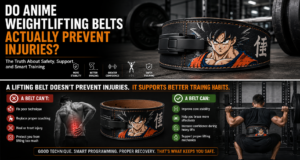
The Short Answer
A premium anime weightlifting belt does not prevent injuries on its own.
What it can do is:
- Help improve core stability
- Give you a solid surface to brace against
- Increase confidence during heavy lifts
- Support proper lifting mechanics when used correctly
What it cannot do is:
- Fix poor lifting technique
- Replace proper coaching
- Heal or treat an injury
- Protect you from lifting more weight than you’re ready for
The belt is there to support good training habits—not replace them.
Why Lifters Use Weightlifting Belts
A lifting belt works by giving your abdominal muscles something firm to brace against.
When you take a deep breath and tighten your core, the belt helps increase intra-abdominal pressure. That added stability helps many lifters maintain a stronger position during heavy compound movements.
This is why belts are commonly used during:
- Heavy squats
- Deadlifts
- Overhead presses
- Heavy barbell rows
The support comes from the leather, construction, and proper fit—not the anime artwork.
Can an Anime Weightlifting Belt Prevent Back Injuries?
This is where many people get confused.
A lifting belt doesn’t “prevent” injuries in the medical sense.
Instead, it helps many lifters feel:
- More stable
- Better braced
- More confident under heavy weight
Those benefits can contribute to safer lifting when combined with proper technique.
If your lifting form is poor or you’re attempting weights beyond your ability, a belt won’t eliminate that risk.
Our Experience After 10 Years
We’ve spent 10 years making lifting belts, including 3 years making anime lifting belts.
That experience has taught us to check fit, materials, stitching and hardware before making claims about any belt.
Our experience has taught us one practical lesson.
The lifters who benefit the most from a belt are the ones who already focus on:
- Good technique
- Proper bracing
- Smart programming
- Progressive overload
- Recovery
The belt supports those habits.
It doesn’t replace them.
What Our Customers Tell Us
Over the years, many customers have shared similar experiences.
Several told us they previously felt unstable during heavy squats or deadlifts because they struggled to brace properly.
After switching to one of our premium Custom Weightlifting Belts, they said they felt:
- More secure under the bar
- Better able to brace
- More confident during heavy lifts
One customer explained that heavy squats always made him feel uncomfortable because he couldn’t maintain a strong brace.
After using one of our premium leather belts, he said the extra support helped him focus on his technique instead of worrying about feeling unstable.
Another customer had lost confidence after experiencing lower back discomfort during heavy deadlifts.
He wanted better support while improving his bracing.
After several weeks of training, he told us the belt helped him feel more stable during heavy pulls and gave him the confidence to train consistently again.
We always make one thing clear.
A lifting belt did not heal or treat their discomfort.
It simply became one part of better training habits.
The Biggest Mistakes People Make
After 10 years of working with lifting belts, we’ve noticed that the biggest problems rarely come from the belt itself.
They come from how it’s used.
Wearing the Belt Too Loose
A loose belt doesn’t provide enough resistance for effective bracing.
Wearing It Too Tight
If you can’t take a deep breath into your stomach, the belt is too tight.
A lifting belt should feel snug—not restrictive.
Wearing It for Every Exercise
You don’t need a belt for every movement.
Exercises like curls, triceps extensions, lateral raises, and most machine exercises generally don’t require one.
Relying on the Belt Instead of Learning to Brace
A belt enhances good bracing.
It cannot create good bracing.
Learning how to engage your core properly should always come first.
Skipping Warm-Ups
Jumping straight into heavy lifts is one of the fastest ways to increase injury risk.
Good warm-ups prepare your muscles and joints for heavier loads.
Ego Lifting
Trying to impress others by lifting more weight than you’re ready for is never worth it.
Progress comes from consistency—not rushing.
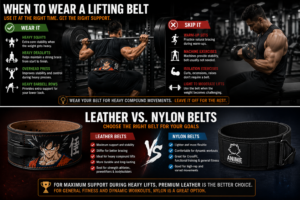
When Should You Wear a Lifting Belt?
Knowing when to wear a belt is just as important as choosing the right one.
Heavy Squats
Yes.
This is one of the best times to wear a lifting belt.
Heavy Deadlifts
Absolutely.
A belt helps many lifters maintain a stronger brace throughout the lift.
Heavy Overhead Press
Yes.
Many lifters prefer wearing a belt during heavy overhead pressing for added stability.
Bench Press
Usually optional.
Some competitive powerlifters wear one during maximum attempts, but most recreational lifters don’t need it.
Heavy Barbell Rows
Many lifters like wearing a belt for extra lower back support during heavy rowing.
Machine Exercises
Most machine exercises don’t require a lifting belt because the equipment already provides stability.
Isolation Exercises
Leave the belt off.
Movements like curls, leg extensions, calf raises, and lateral raises generally don’t need one.
Warm-Up Sets
Practice bracing naturally during lighter warm-up sets.
As the weight becomes challenging, put the belt on for your heavier working sets.
Should Beginners Wear a Belt?
Yes—but not immediately.
If you’re completely new to lifting, spend time learning:
- Proper squat mechanics
- Deadlift technique
- Core bracing
- Breathing
Once your technique becomes consistent and your training weights increase, a lifting belt becomes a valuable training tool.
Leather vs. Nylon Belts
Not every lifting belt provides the same support.
Premium Genuine Leather
Leather belts provide:
- Greater stiffness
- Better long-term durability
- More consistent support
- A stronger surface to brace against
They’re ideal for:
- Powerlifters
- Bodybuilders
- Strength athletes
- Heavy compound training
Nylon Belts
Nylon belts are:
- Lighter
- More flexible
- Comfortable for varied workouts
They’re often preferred for:
- General fitness
- Functional training
- CrossFit workouts
For maximum support during heavy lifting, we generally recommend premium genuine leather.
What We Learned From Customers Who Switched
Many customers come to us after replacing inexpensive lifting belts.
The most common complaints about their previous belts include:
- Leather that was too soft
- Weak buckles
- Poor stitching
- Belts that shifted during heavy lifts
- Belts that lost their shape quickly
After switching to one of our premium genuine leather belts, many noticed the difference immediately.
Customers frequently tell us the belt:
- Feels more solid
- Stays in place better
- Provides a stronger surface for bracing
- Improves confidence during heavy lifts
We never promise bigger lifts or injury prevention.
Instead, we focus on providing reliable equipment that supports good lifting habits.
Choosing a Belt for Safety
If safety is one of your priorities, here’s what to look for:
- Premium genuine leather
- 10mm or 13mm thickness
- Heavy-duty lever, prong, or SBD-style buckle
- Reinforced stitching
- Accurate sizing
- Strong edge finishing
- Quality craftsmanship
An Anime Lifting Belt should be something you trust every time you train.
Frequently Asked Questions
Can a Lifting Belt prevent injuries?
No. A Lifting Belt cannot prevent injuries on its own. It supports better bracing and stability during heavy lifts.
Can a lifting belt fix poor technique?
No. Proper lifting technique always comes first.
Should beginners wear lifting belts?
Yes, once they’ve learned proper technique and begin lifting heavier compound movements.
Is an anime weightlifting belt as supportive as a plain belt?
Yes. If both belts are made with the same premium materials and construction, they provide the same level of support.
Should I wear a belt for every workout?
No. Reserve it for heavy compound lifts where extra support is beneficial.
Is leather better than nylon?
For heavy strength training, premium genuine leather generally provides greater stiffness and support than nylon.
Final Thoughts
After 10 years of manufacturing lifting belts, one message has stayed the same.
A lifting belt is one piece of your training—not the entire solution.
Good technique.
Smart programming.
Proper warm-ups.
Recovery.
Progressive overload.
Those are the habits that help reduce injury risk over time.
A premium anime weightlifting belt simply supports those habits by helping you brace more effectively during heavy lifts.
If you choose a belt that’s built with premium materials, fits correctly, and is used at the right time, it can become one of the most valuable pieces of equipment in your gym bag.
Train smart.
Lift with control.
Use your belt as a tool—not a shortcut.